 Eduard Huma
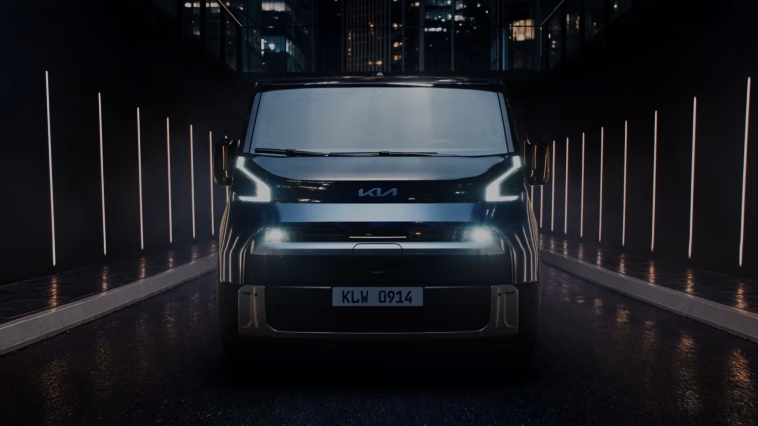
Electric vans are no longer particularly unusual. And Kia’s new PV7 is trying to make the van itself unusual.
Unveiled on September 14, the PV7 becomes the second major model in Kia’s PBV strategy, following the smaller PV5. It’s larger, designed for longer routes and heavier work, but the interesting part isn’t simply how much cargo can fit behind the driver.
Kia has spent a surprising amount of time thinking about how often that driver has to get out. And anyone delivering parcels for a living knows the routine. Stop the van. Unbuckle. Open the door. Walk around. Open another door. Find the package. Close everything. Get back in.
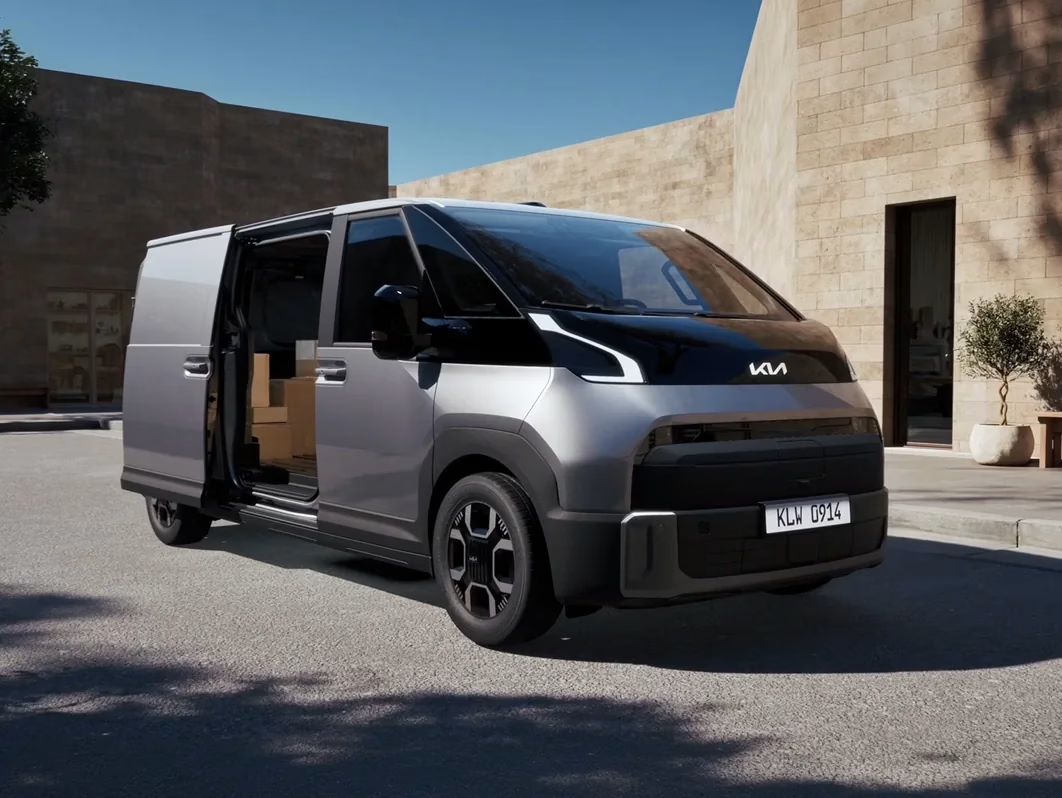
Then repeat it perhaps a hundred times. The PV7 attempts to remove some of that friction with an unusual walk-through cabin, allowing the driver to move directly from the seat into the cargo area without leaving the vehicle. There’s also a low floor and sliding side access intended to make repeated loading and unloading less irritating.
None of this sounds particularly dramatic. That’s precisely why it might matter.
Commercial vehicles live very different lives from passenger cars. Saving a driver a few seconds doesn’t mean much on a Sunday trip to the supermarket. Multiply those seconds by dozens of stops every day and thousands of working hours over the vehicle’s life, and suddenly a clever doorway becomes more useful than another 50 horsepower.
The PV7 also sits on Kia’s dedicated electric PBV architecture rather than being a diesel van converted to accept batteries.
That gives designers considerably more freedom with the packaging.
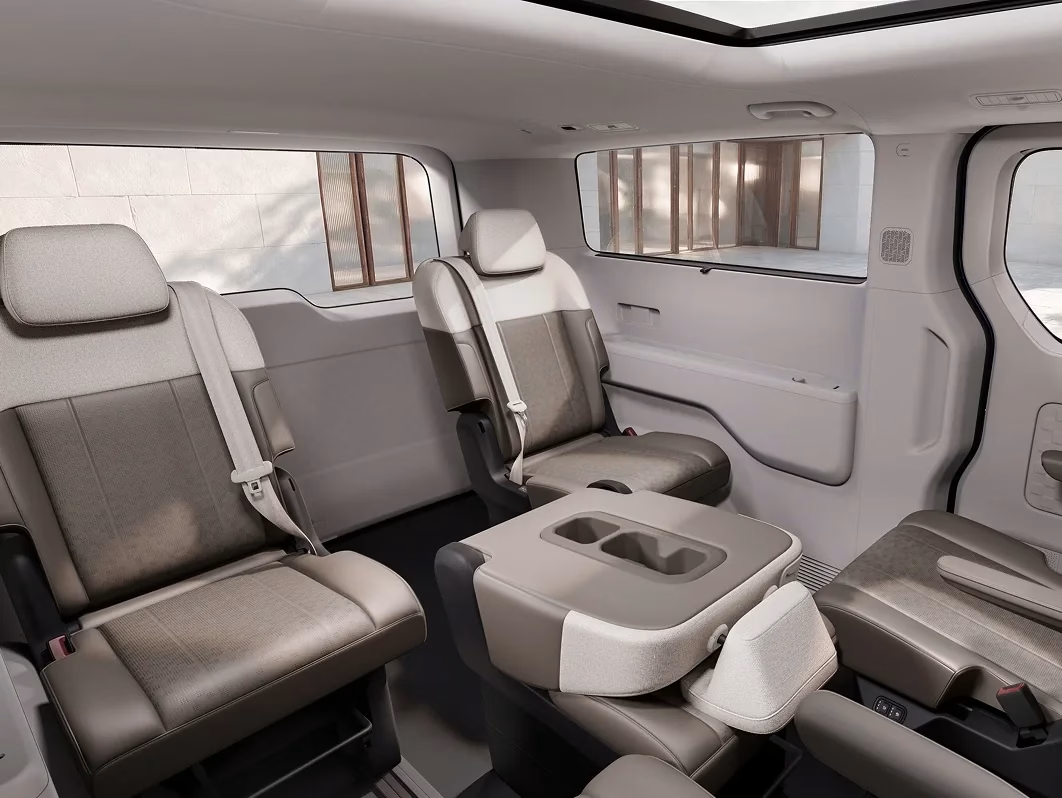
Kia is pitching it at cargo transport and longer-distance operation, sitting above the PV5 in its growing commercial range. Different configurations are planned as the PBV family develops, allowing the basic platform to handle more than one job.
There’s another useful feature when the van isn’t moving. Kia has designed the PV7 to act as a mobile energy source. Tools and other electrical equipment can draw power from the vehicle, potentially removing the need for a separate generator on some jobs.
Again, not glamorous. Very useful. And that seems to be the theme here.
Passenger EV launches often revolve around enormous touchscreens, acceleration figures and ambient lighting. Commercial buyers have a rather simpler question: will this thing make my business easier or cheaper to operate?
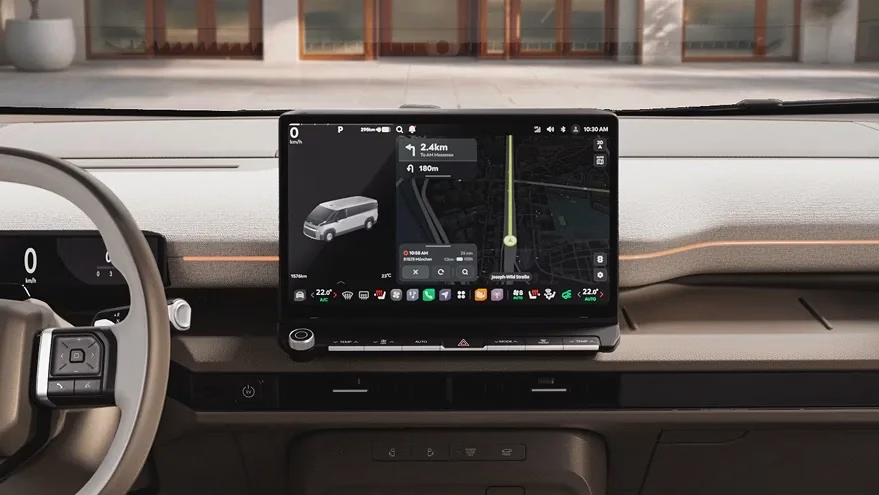
The PV7 needs to answer that over years rather than during a 20-minute test drive.
Range, payload, charging speed, reliability and final pricing will ultimately decide whether businesses actually buy it. Some of those market-specific numbers will become clearer as Kia moves toward sales.
But the underlying thinking already makes sense. Kia isn’t trying to convince us that the future of the van is exciting. It’s trying to make a working day slightly less irritating.
For somebody climbing in and out of one a hundred times before dinner, that may be a much better sales pitch.