 Eduard Huma
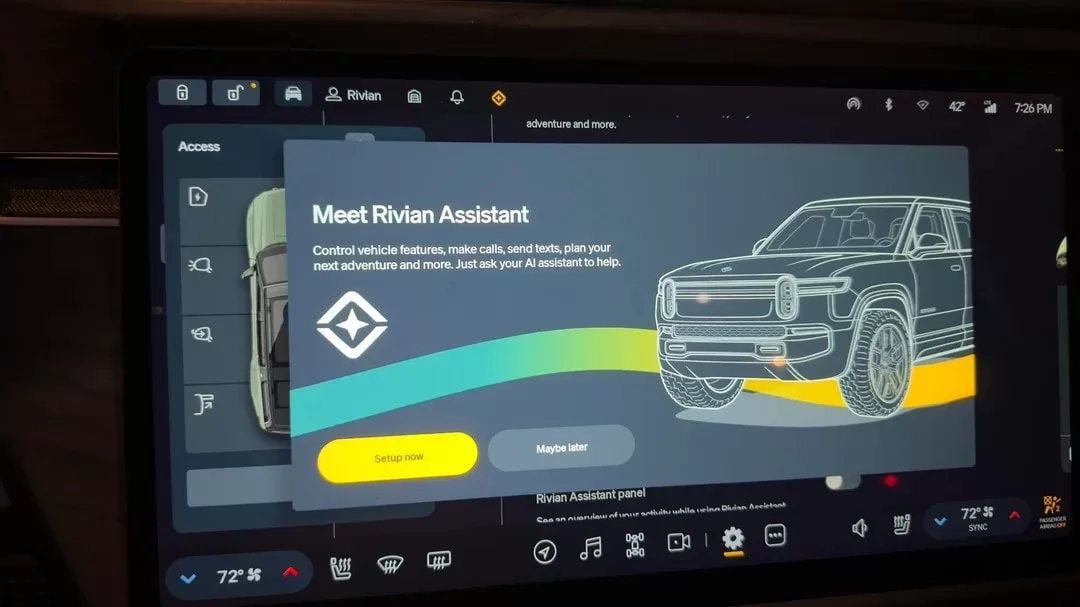
Back in December, Rivian showed its AI Assistant during the company’s Autonomy & AI Day presentation. The demo already hinted at broader ambitions than basic voice controls. Five months later, the system reached Rivian customers through the 2026.15 software update, and reactions from early users spread quickly across owner communities.
The rollout covers Rivian vehicles running the latest software, beginning with Gen 1 R1S and R1T models and extending toward the upcoming R2 crossover. Owners started testing the assistant immediately, pushing far beyond ordinary commands. Some even treated the system like an interrogation target, asking detailed questions about future Rivian products and company plans. Results varied. At one point, the assistant mentioned an R3X launch this year, though users quickly noted the information did not appear reliable.
Compared with Tesla’s Grok integration, Rivian’s setup operates on a broader level inside the vehicle. Grok handles navigation requests and answers general questions. Recent updates also added location-based reminders. Yet the system still does not replace Tesla’s existing voice-command structure. Much of the interaction stays limited to conversational tasks and internet searches.
Rivian approached the problem differently. Running on Rivian Unified Intelligence, the assistant functions as a multi-modal AI agent tied directly into the vehicle’s systems and third-party services. The system accesses diverse LLMs to complete tasks rather than functioning like a simple chatbot layered onto the infotainment screen.
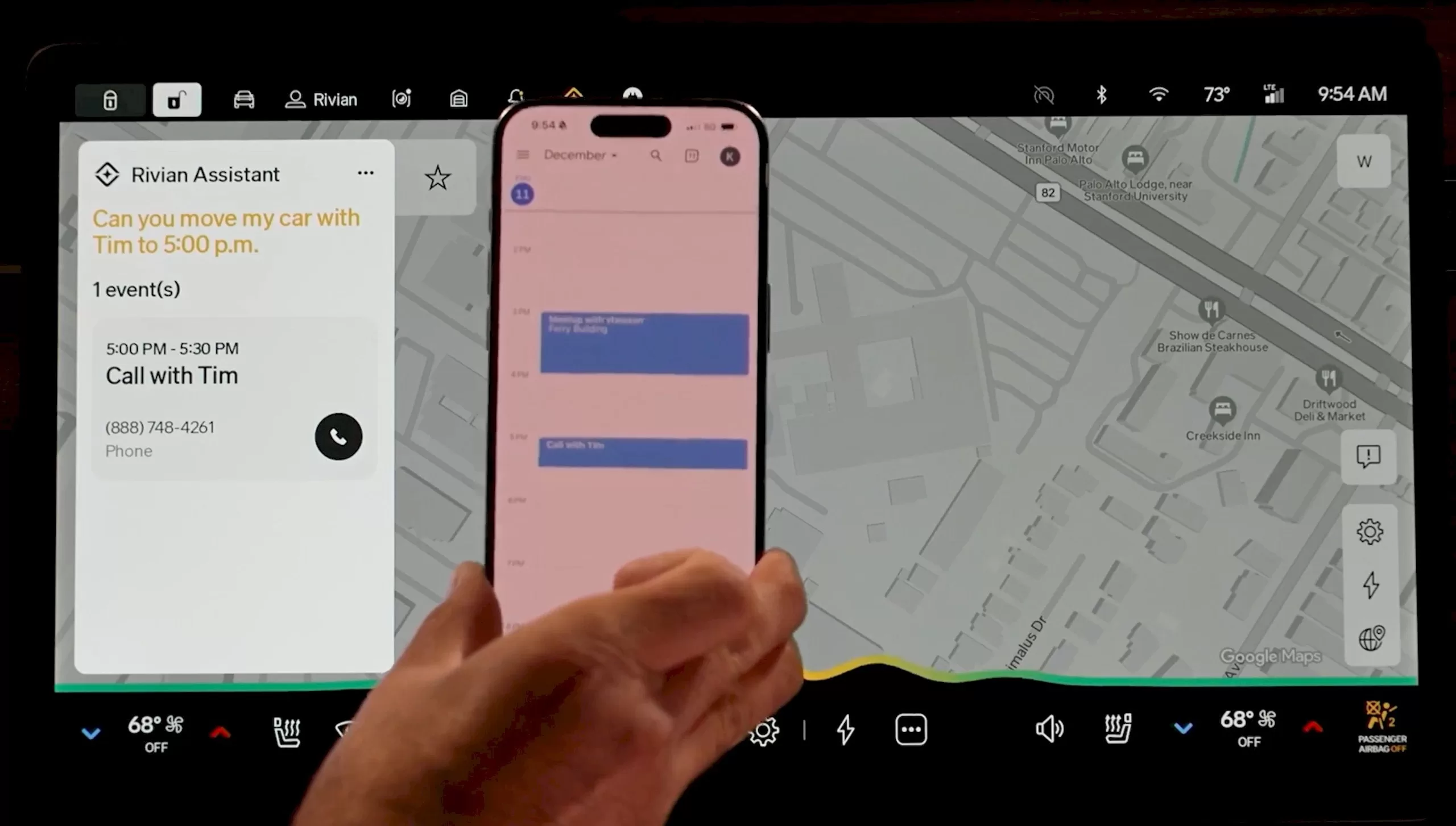
And the list of supported actions turned out longer than many expected. Rivian Assistant controls drive modes, opens and closes motorized panels, adjusts climate settings, and accesses driving data along with remaining range information. Drivers also issue multiple commands within a single sentence. The assistant integrates with Google Calendar for appointments and connects with music services to assemble playlists without requiring touchscreen interaction.
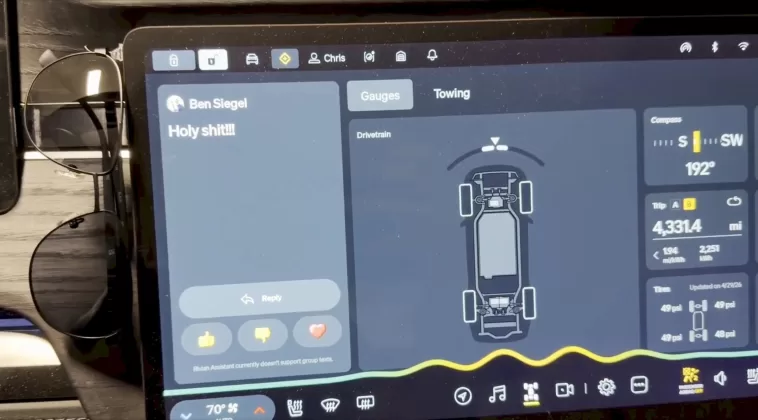
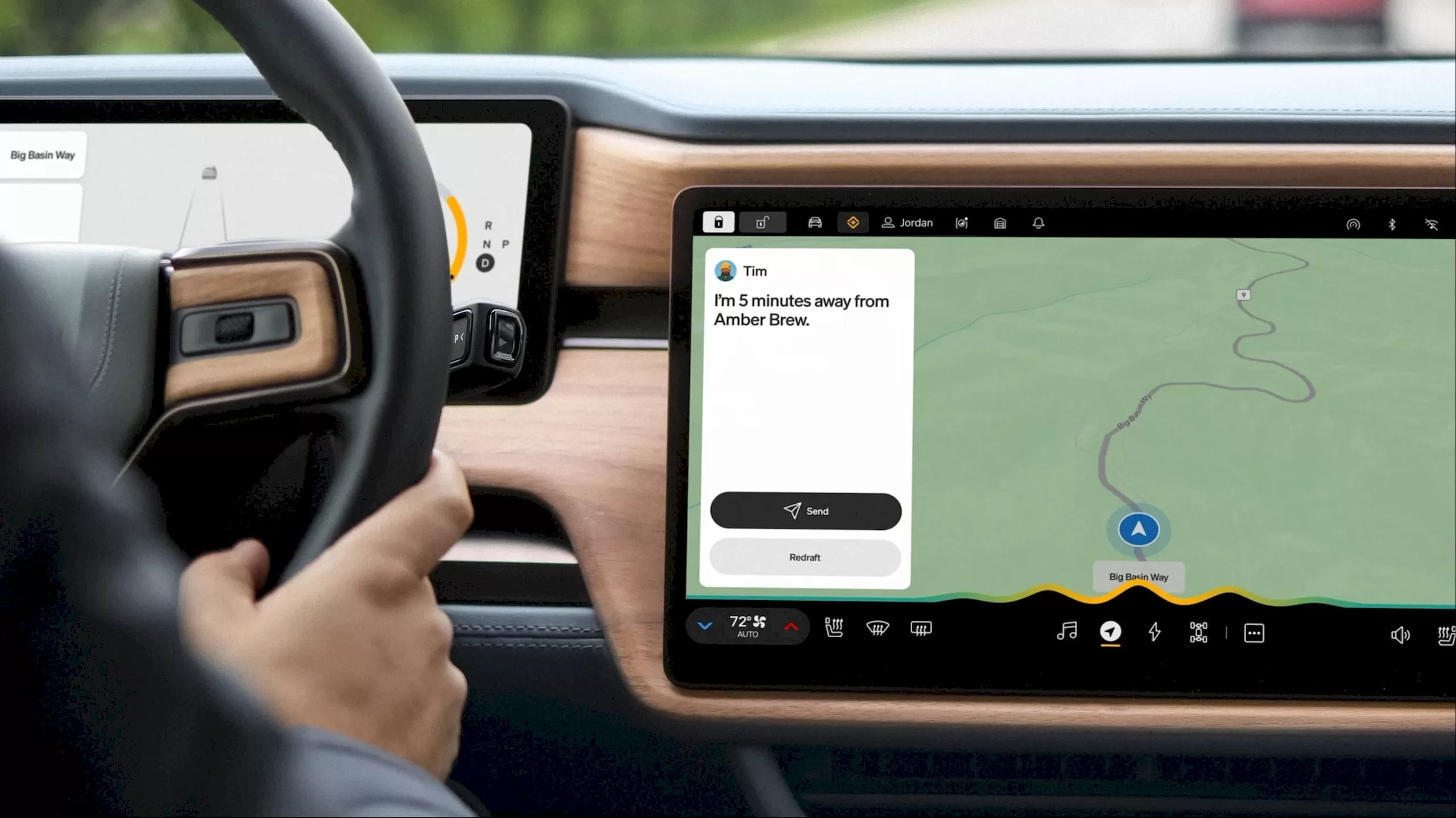
One detail drew extra attention online. Rivian Assistant reads incoming messages aloud word for word while also helping draft replies. Owners pointed out obvious risks tied to NSFW texts being spoken inside the cabin when children are present. A viral post on X even warned drivers directly about the behavior after testing the feature personally.
Despite a few rough edges, the response from early adopters leaned heavily positive. Rivian’s AI ambitions looked ambitious in December. After deployment, the assistant appears far closer to a full in-car operating layer than many expected at the time.